The core structure of a single shaft shredder consists of a horizontally arranged rotating cutter shaft equipped with multiple sets of replaceable cutting blades, which form a shearing pair with a stationary counter knife on the frame. Driven by a hydraulic pusher system that continuously feeds materials toward the cutter shaft, materials are shredded through the shearing action between blades and the counter knife. A screen at the bottom of the shredding chamber precisely controls the output particle size to achieve highly uniform discharge.
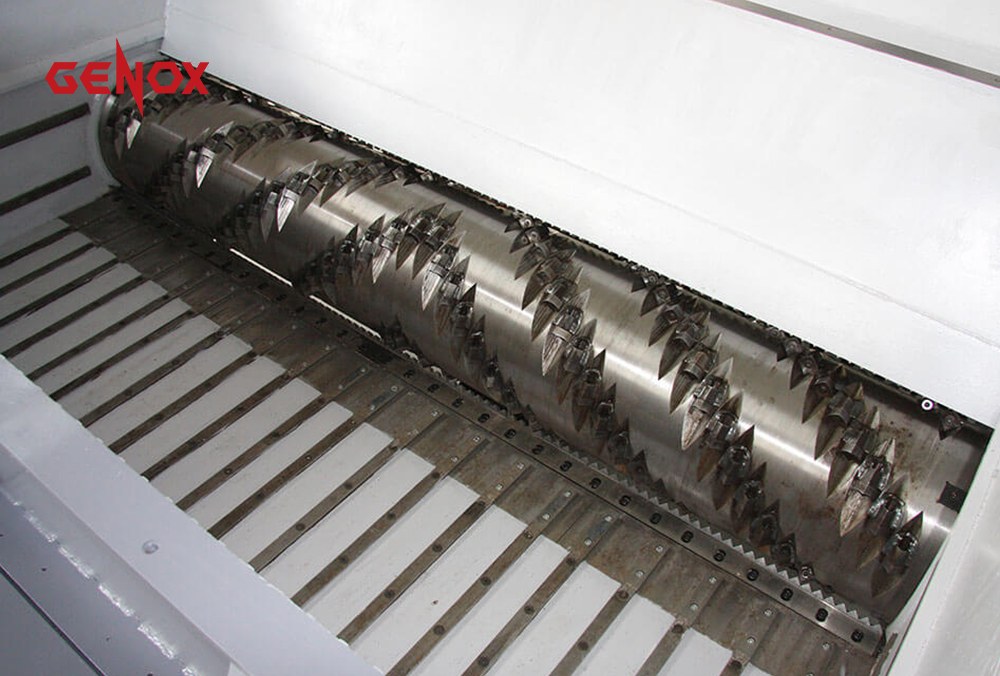
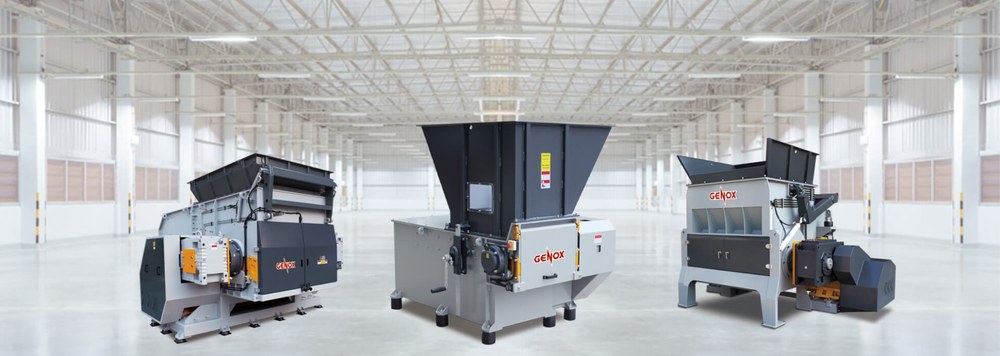
Single shaft shredders focus on precise shredding and uniform output, and are suitable for soft to medium-hard, single-component materials. Typical processing applications include:
A twin shaft shredder is equipped with two low-speed counter-rotating cutter shafts with staggered interlocking cutter discs or hook knives. Through the opposite rotation of the two shafts, they exert combined forces of tearing, shearing and squeezing to break down bulk materials. Most models are equipped with an automatic reversing system to clear jams automatically when encountering hard objects, delivering robust anti-clogging performance. Its core advantage is high-torque, heavy-duty shredding capability.
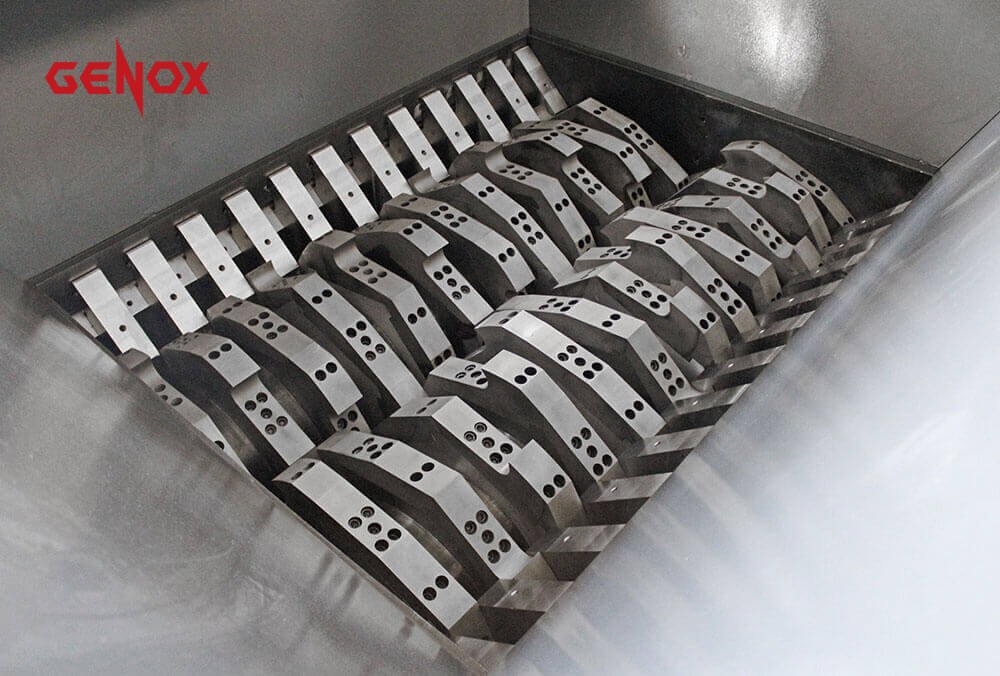
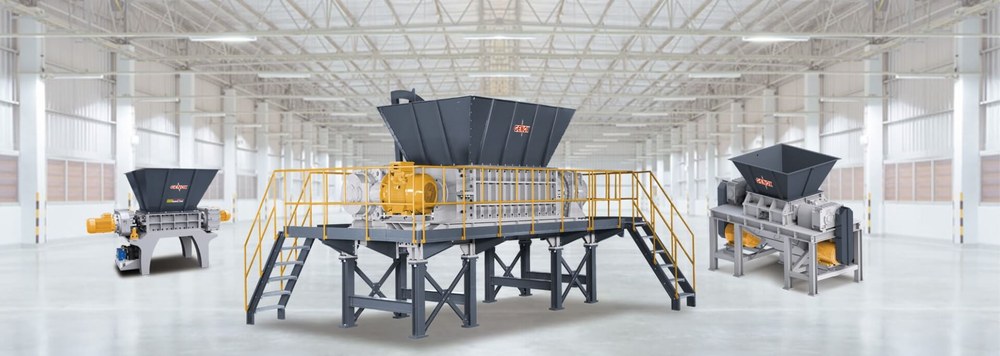
Twin shaft shredders feature high torque and strong adaptability, and are suitable for bulky, high-hardness, complex mixed materials. Typical processing applications include:
The core selection criterion is the physical properties, component complexity and output requirements of the materials to be processed. You can refer to the following judgment logic:
Soft/clean plastic materials → Prioritize single shaft shredders
For single-component plastics such as clean injection scrap, plastic pipes, profiles, plastic lumps and engineering plastics, with downstream pelletizing/extrusion processes and high requirements for particle size uniformity, single-shaft shredders are the optimal choice for higher production efficiency and lower operating costs.
Metal and bulky hard materials → Must choose twin shaft shredders
For bulky and high-hardness materials such as metal scrap, tires, large plastic drums/tanks and plastic furniture, single shaft shredders cannot withstand heavy-duty shredding and are prone to jams and blade chipping. The high-torque design of twin shaft shredders handles such scenarios stably.
Mixed waste/complex materials → Prioritize twin shaft shredders
For materials with complex components and various forms such as municipal solid waste, mixed industrial scrap and e-waste, the strong adaptability and anti-clog capability of twin shaft shredders ensure continuous and stable operation. For higher particle size requirements later, add a single shaft shredder for secondary fine shredding.
There is no absolute "better or worse" between single shaft and twin shaft shredders, but a division of labor for different application scenarios. For selection, it is recommended to first clarify the material type, output requirements and throughput targets, then match the corresponding model to achieve the optimal input-output ratio and long-term operation stability.
As a professional brand in the solid waste recycling equipment industry, GENOX provides a full product matrix of single shaft and twin shaft shredders. Whether you process soft clean plastics, hard metal parts or mixed waste with complex components, GENOX can provide customized shredding equipment solutions based on your material characteristics, throughput targets and process requirements. Welcome to contact GENOX for exclusive selection guidance and complete recycling solutions.
 EN
EN CN
CN ES
ES AR
AR RU
RU FR
FR DE
DE FA
FA NL
NL